Return to homepage ↗
English
English简体中文繁體中文Bahasa MelayuBahasa IndonesiaภาษาไทยTiếng Việt
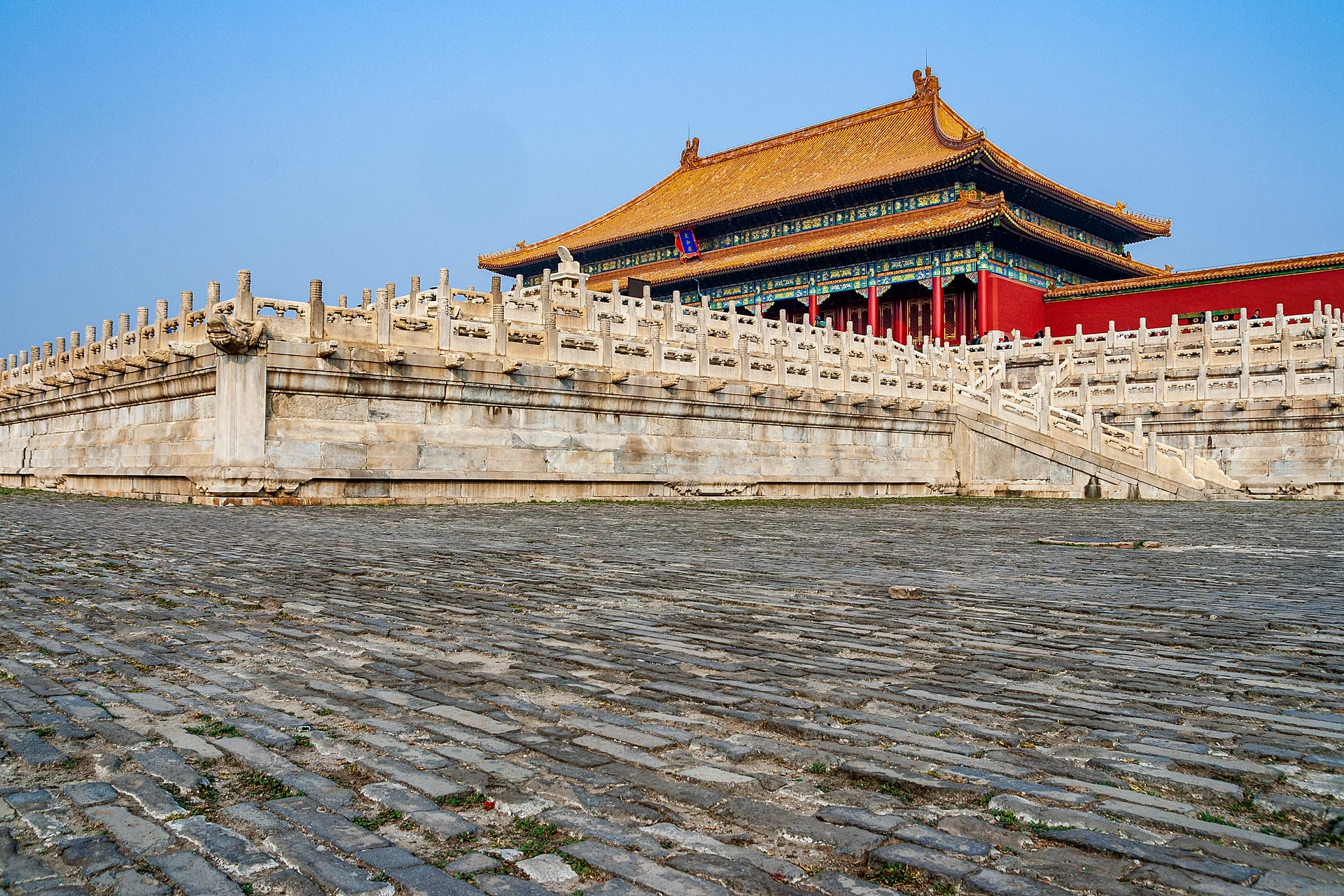
Roof, terrace, and plaza of Taihe Hall, Forbidden City

Discover China / Oriental aesthetics / Ancient architecture

Under the eaves
Understand China

From a grand hall to a village,
see the beauty of structure—and the people who lived in them.

Step into five buildings↓
Taihe Hall · Beijing
Eastern aestheticsGardensAncient architectureTeaIntangible cultural heritageThis article · Ancient architecture

Not just seeing the building, but understanding why it was built

Under the eaves,
lies the life and ideals of the Chinese people

A building responds to the needs of its time. Palaces organize rituals, temples carry faith, villages provide daily life. Materials, terrain, and lifestyle shape their form.

This journey moves from imperial palaces and Tang dynasty wooden structures, to cliffside temples, earthen roundhouses, and overseas Chinese villages. Spanning from ancient times to modern history, we care not only about dates, but how people turned their sense of order into living spaces.

Learn how to see architecture first ↘
Taihe Hall, Forbidden City — real scene
Forbidden City · Taihe Hall and its white marble terrace

0 1Beijing · Dongcheng District / Palace and ritual system

Forbidden City · Taihe Hall

Follow the axis, understand palace order

Walk through courtyards, then look up at the roof. Openness and enclosure, elevated platforms and halls—this rhythm shapes your journey.

The Forbidden City was the imperial palace during the Ming and Qing dynasties. Taihe Hall stands at the heart of the outer court, where the palace’s axial layout, courtyards, and hierarchical architecture reflect traditional court rituals.

View with a question in mind

Observe Taihe Hall’s platform, roof, and front plaza from accessible areas: how does the architecture convey solemnity?
Ideal for: If you enjoy history, palace architecture, and spatial order
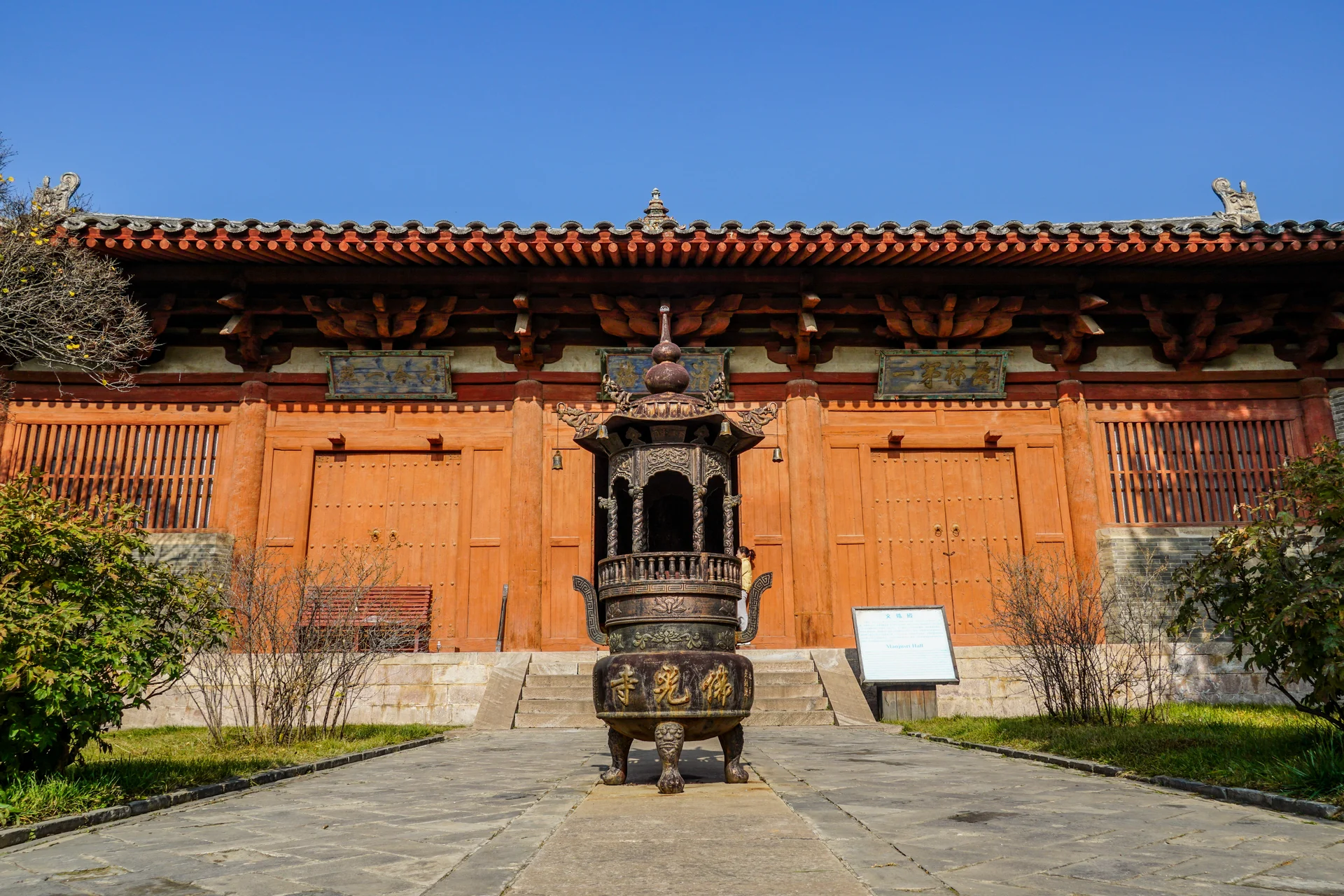
East Great Hall, Wugong Temple — real scene
East Great Hall, Wugong Temple · Wutai County, Xinzhou City, Shanxi Province

0 2Wutai County, Xinzhou City, Shanxi Province / Wooden structures and time

Wugong Temple · East Great Hall

Meet the Tang Dynasty beneath a wooden hall

Move away from grand city skylines and focus on what’s under the eaves. How do wood beams support the roof? How do components work together?

Wugong Temple East Great Hall is one of the few surviving Tang dynasty wooden structures and part of the Wutai Mountain World Heritage Site. The building and its painted sculptures carry the temple’s history.

View with a question in mind

First notice the graceful roof outline, then observe the brackets under the eaves from allowed viewing spots. Don’t rush to memorize terms—feel the structure and proportions first.

Ideal for: If you’re drawn to wooden architecture, architectural history, or temple art
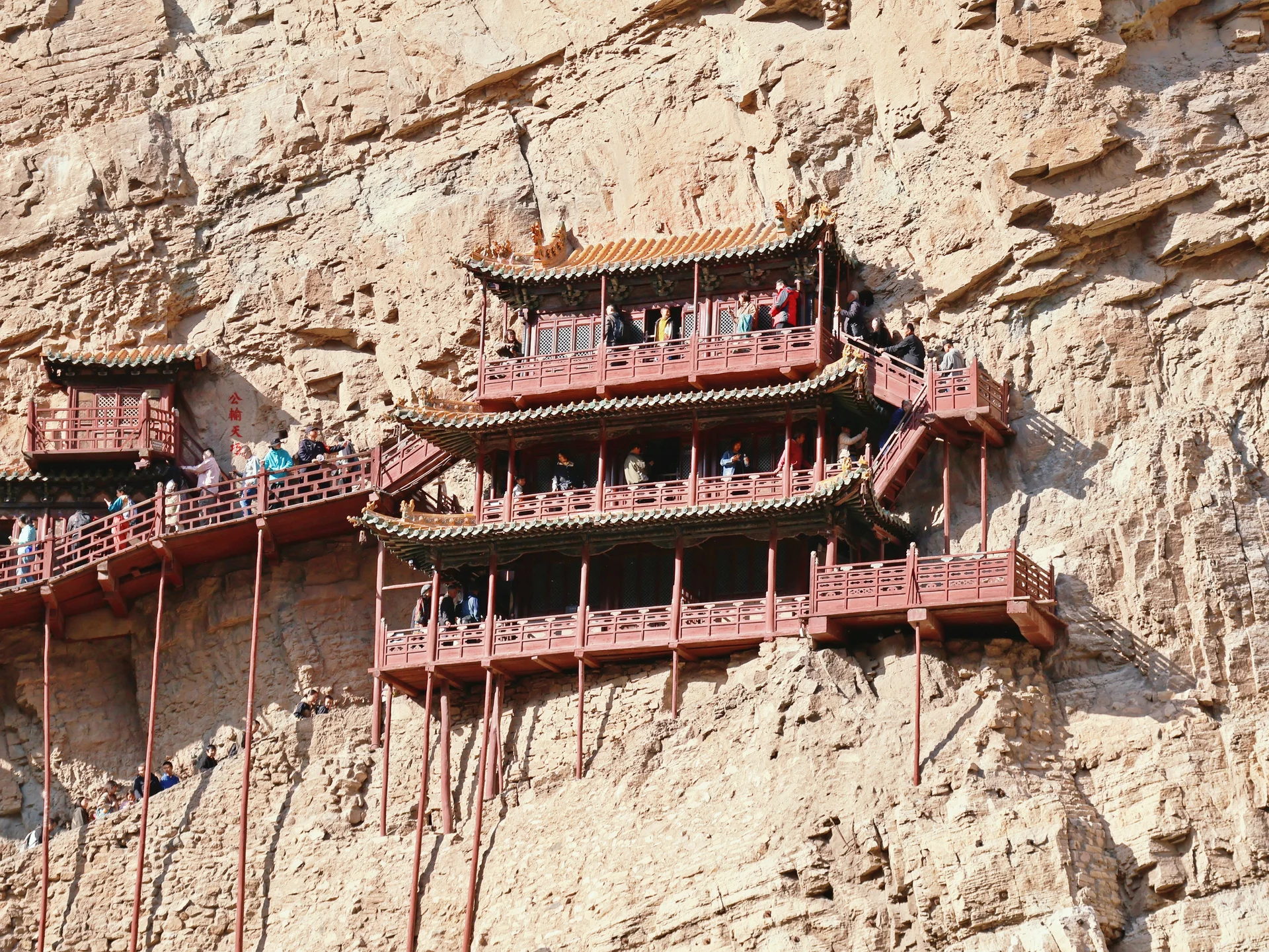
Hanging Temple — real scene
Hanging Temple · Hunyuan County, Datong City, Shanxi Province

0 3Hunyuan County, Datong City, Shanxi Province / Mountain terrain and construction

Hanging Temple

When architecture meets a cliff face

From afar, the halls seem embedded in the rock wall. Before approaching, observe how man-made lines respond to the mountain’s contours.

The Hanging Temple is built into the cliffs of Jinlong Gorge on Mount Heng. Its halls and corridors unfold along the natural slope. It’s a rare example of wooden architecture and reflects the convergence of multiple traditional philosophies.

View with a question in mind

At ground-level viewing areas, compare the relationship between the cliff face, roofs, and corridors: where does the design follow the terrain, and where does it alter your view?

Ideal for: If you love mountain landscapes and clever architectural solutions
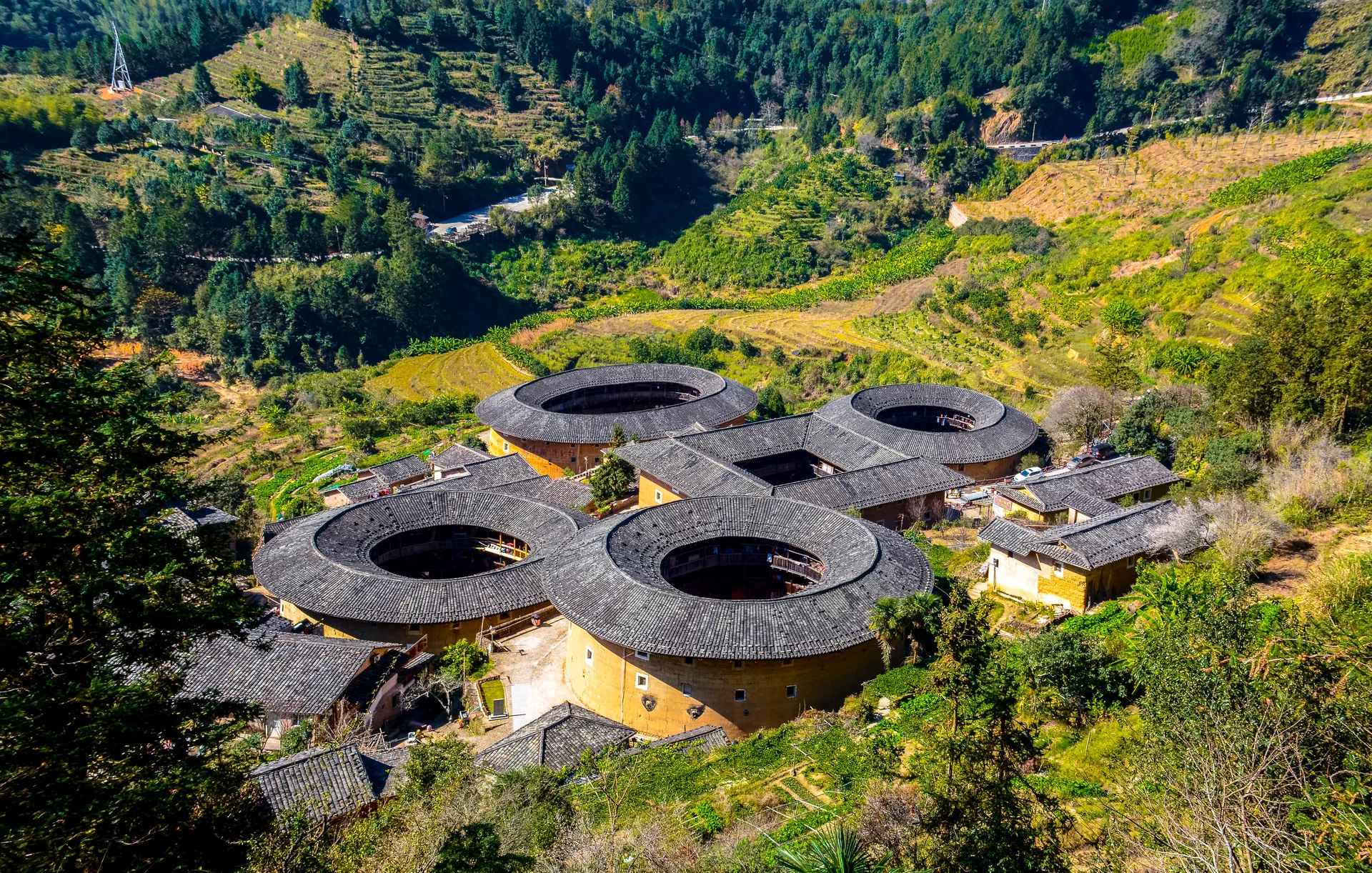
Tianluokeng Tulou Cluster — real scene
Tianluokeng Tulou Cluster · Nanjing County, Zhangzhou City, Fujian Province

0 4Nanjing County, Zhangzhou City, Fujian Province / Community and rural life

Tianluokeng Tulou Cluster · Nanjing County, Fujian

Enclosed courtyards, inward-growing lives

A building isn’t just a sight to behold—it’s a place where people once lived, or still live. Shift your gaze from the exterior to the courtyard, and the story begins.

Fujian tulou are known for their rammed earth walls and collective residential layouts. The Tianluokeng cluster is part of the UNESCO World Heritage site Fujian Tulou. The buildings and surrounding mountainous village landscape are interdependent.

View with a question in mind

First view the relationship between the cluster and the hillside, then observe shared courtyards in areas open to visitors. Respect residents’ thresholds and daily life—do not treat private homes as exhibition spaces.

Ideal for: If you’re interested in rural architecture, settlements, and local life
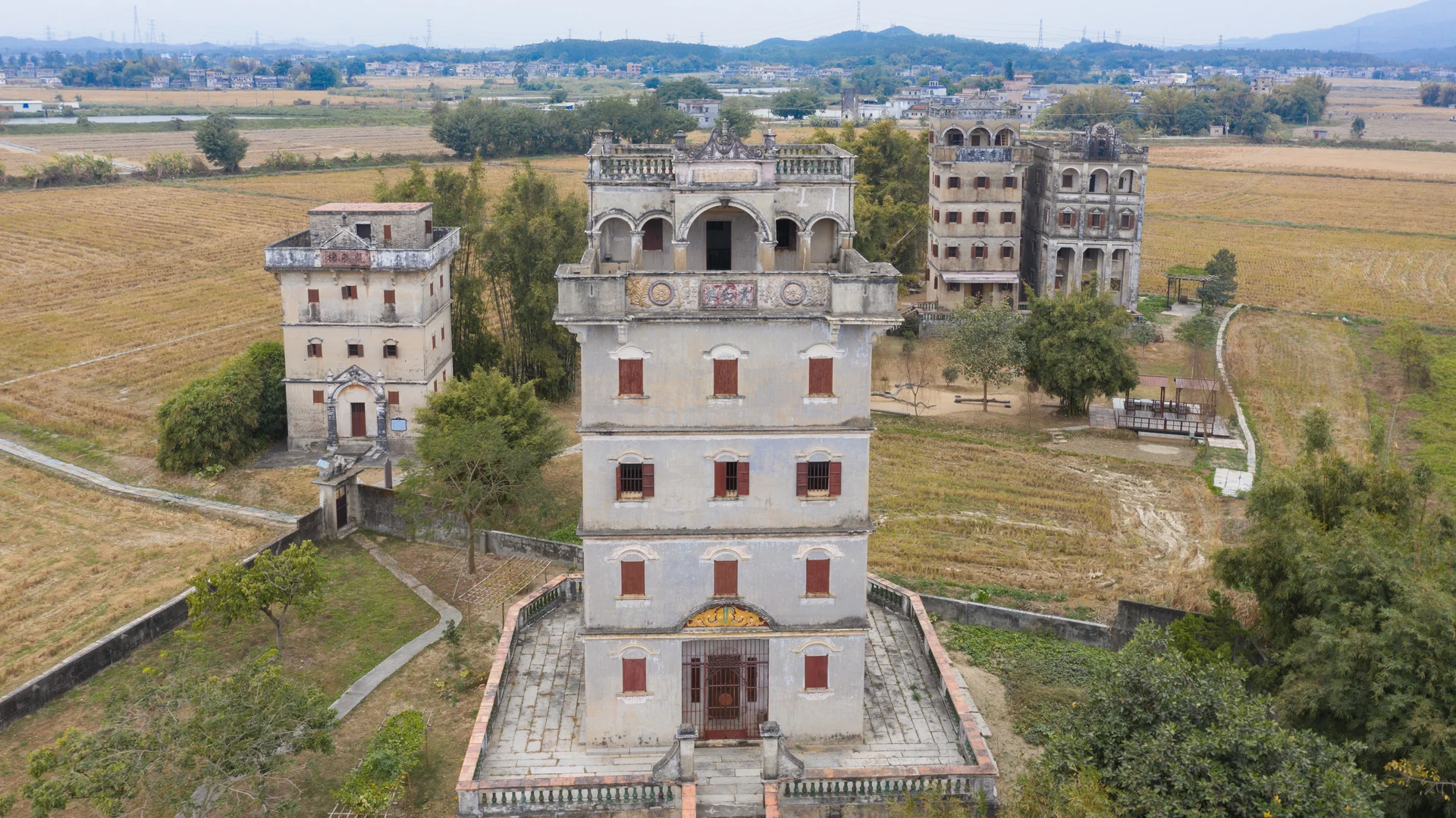
Zili Village · Kaiping Fortified Towers — real scene
Zili Village · Kaiping Fortified Towers, Kaiping City, Guangdong Province

0 5Kaiping City, Guangdong Province / Overseas Chinese heritage and cultural fusion

Zili Village · Kaiping Fortified Towers, Guangdong

From one tower, glimpse the world beyond the sea

Towers among farmland bear traces of familiar life and distant decorative influences. Here, architecture becomes a witness to migration and return.

Kaiping fortified towers blend Chinese rural forms with Western decorative styles. They serve both residential and defensive purposes. Zili Village is part of the UNESCO World Heritage site Kaiping Fortified Towers and Villages. Many were built in the late 19th and early 20th centuries, reflecting a unique overseas Chinese character.

View with a question in mind

Compare the tower’s façade, windows, and roof details, then step back to observe surrounding farmhouses and fields: how do different architectural languages meet in one place?

Ideal for: If you enjoy overseas Chinese history, cultural exchange between China and the West, or village photography

For those seeing ancient architecture for the first time

Four perspectives to help you understand a building

01

Look at layout

First see how the building sits on the land, then examine courtyards and axes. How does space guide movement?

02

Look at structure

From columns and beams to the roof, observe how parts connect. Visible supports offer a key to understanding architecture.

03

Look at materials

Wood, earth, brick, and stone each have their own character. Notice textures and joints, and also later repair marks.

04

Look at life

Who built it? Who lived here? Connect the building to local history, beliefs, family, and migration.

Start from your interests

Start with the building you most want to understand

The five sites are in Beijing, Shanxi, Fujian, and Guangdong—ideal for planning around your region. The Hanging Temple involves climbing steps; those with acrophobia or mobility issues should discuss ground-level viewing options. Visit, booking, and indoor photography rules follow management guidelines on the day of visit.

Fully Customisable · Travel at Your Own Pace

Which door would you like to open first?
Let’s begin there

Tell us which building interests you, your travel date, and who you're traveling with.
We’ll tailor your journey based on your interests, walking pace, and city itinerary.

Plan my ancient architecture journey ↗We can discuss guided tours, slow village walks, and family-friendly observations. Services and access depend on confirmed itinerary.
Sources and image rights+

Basic information verified as of November 2026; viewing suggestions are original content by China Guide.

Image credits

Forbidden City · Taihe Hall :Forbidden City · Taihe Hall, Beijing / Artisan of Yipu Garden (ID:26189128) / VRF; the current account does not have enterprise commercial authorizationAction: Zoom, WebP conversion, and display cropping 。

Wugong Temple · East Great Hall :East Great Hall, Wugong Temple · Wutai County, Xinzhou City, Shanxi Province / Chasing Red Sun (ID:20961166) / VRF; the current account does not have enterprise commercial authorizationAction: Zoom, WebP conversion, and display cropping 。

Hanging Temple :Hanging Temple · Mount Heng / Zhi An Jun (ID:43006362) / VRF; the current account does not have enterprise commercial authorizationAction: Zoom, WebP conversion, and display cropping 。

Tianluokeng Tulou Cluster · Nanjing County, Fujian :Tianluokeng Tulou Cluster · Nanjing County, Zhangzhou City, Fujian Province / rainbow(ID:1433889) / VRF; the current account does not have enterprise commercial authorizationAction: Zoom, WebP conversion, and display cropping 。

Zili Village · Kaiping Fortified Towers, Guangdong :Zili Village · Kaiping Fortified Towers, Kaiping City, Guangdong Province / River2014 Big River (ID:1143103) / VRF; the current account does not have enterprise commercial authorizationAction: Zoom, WebP conversion, and display cropping 。

Custom Journey

Do not enter sensitive data such as passport details, payment information, or medical records.